
A bottle can look clean and still arrive with dust, fibers or handling contamination. Washing every bottle is not automatically safer, however: an uncontrolled wet rinse can add water, chemical residue, drying time and another route for contamination. The correct decision begins with an incoming-packaging specification and a product-risk assessment, not with the purchase of a rinsing machine.
1. Decide from the Package, Product and Risk
The same bottle-preparation rule should not be copied across every cosmetic application. A sealed bag of new pump bottles from an approved packaging supplier presents a different incoming condition from unpacked glass bottles stored near a dusty production area. A preserved rinse-off product, an anhydrous oil and a water-rich leave-on lotion can also have different contamination concerns.
| Incoming condition | Possible preparation route | Evidence to define | Main line-design question |
|---|---|---|---|
| New containers delivered in protected packaging under an approved supplier specification | Controlled depacking, visual or automated inspection and direct transfer may be considered | Supplier specification, packaging integrity, storage controls, sampling plan and release record | How will the open neck remain protected between depacking and filling? |
| Loose dust or fibers are the identified concern | Dry particle-removal step such as approved filtered air, vacuum extraction or a combined method | Air quality, extraction, particle challenge, container geometry and reject criteria | Can the bottle be inverted or accessed without creating static, recontamination or unstable transfer? |
| A wet rinse is required by the buyer's approved process | Controlled washing or rinsing followed by drainage and drying | Rinse medium, water quality, contact time, residue limit, drying result and hold time | Is there enough space and capacity for drainage, drying, inspection and accumulation before filling? |
| A microbiological reduction or sterile result is required | Separate specialist process defined and validated by the buyer's quality and regulatory teams | Target result, method, validation protocol, environment and release responsibility | How will the validated state be maintained through transfer, filling and closing? |
The decision is not made by bottle material alone. PET, HDPE, glass, acrylic and multilayer packages have different heat, solvent, scratch, static and drying behavior. Closures, pumps, dip tubes and liners also need their own receiving and handling rules. Use the product, bottle, cap and label checklist to document the complete package rather than sending only a nominal bottle volume.
2. Cleaning, Sanitizing and Sterilizing Are Not the Same Scope
Buyers often use these words as if they mean the same thing. For a machinery project, they should be separated before quotation:
- Inspection identifies visible defects or contaminants under defined conditions; it does not remove them.
- Cleaning removes defined residues, particles or soils using a specified physical or chemical method.
- Sanitizing or disinfection requires a defined agent or process, target, contact conditions and verification. The required meaning depends on the buyer's quality system and market.
- Sterilizing is a substantially different controlled claim and cannot be assumed from ordinary bottle rinsing or filling equipment.
A filtered-air step can be useful for loose particles when properly designed, but it does not prove microbiological control. A wet chemical step may target a different risk, yet it can leave residues or affect plastic packaging if compatibility and drying are not established. The buyer's quality team should own the required outcome; the machine supplier should define exactly what the supplied station does and how it will be tested.
3. Control the Packaging Before It Reaches the Filler
A bottle-preparation station cannot compensate for uncontrolled packaging handling. The practical control chain begins before the line:
FDA cosmetic manufacturing guidance emphasizes storage and handling of primary packaging in a way that prevents mix-ups and microbial or chemical contamination. It does not create one universal instruction to wash every bottle. The manufacturing firm still needs a documented process appropriate to its products, packages and market.
4. Dry Cleaning vs Wet Washing Before Cosmetic Filling
Dry particle removal
Filtered air, vacuum extraction or a combined air-and-vacuum method may be considered when the defined problem is loose dust or fibers. The nozzle, air pressure, filter specification, extraction path and bottle orientation should suit the actual container. A narrow opening, shoulder, static-prone plastic or deep irregular shape may prevent effective particle removal.
Confirm that the method does not simply move contamination from one bottle to another. Air supply quality, oil carryover, condensate, filter maintenance and extraction all belong in the machine requirement. If ionization is proposed for static control, its purpose and verification should also be written down.
Wet washing or rinsing
A wet method adds a complete process rather than a single spray. The buyer needs to define the rinse medium, temperature, pressure, contact time, drainage, drying, environmental exposure after drying and the maximum time before filling. The container and decoration must be compatible with the method.
Residual water can dilute the first product added, disturb an anhydrous formula, support unwanted microbial growth or change fill-weight interpretation. Residual cleaning chemistry can be equally important. If wet washing is required, drainage and dryness should be measurable acceptance points rather than assumptions.
Use as supplied under controlled handling
This can be a valid route when the packaging supplier, protective packing, incoming checks, storage, depacking and transfer controls support it. It is not the same as “do nothing.” The controls and release evidence move upstream, and the open container still needs protection until it is filled and closed.
5. Design the Filling Line Around the Approved Method
Once the preparation route is chosen, integrate it with the actual line rather than treating it as an isolated accessory.
- Place the preparation step after controlled depacking. Avoid carrying dusty outer packaging into the clean side of the process.
- Protect the opening after preparation. Keep transfer distance and uncovered accumulation under control.
- Match orientation and handling. Inverting a round glass bottle is different from handling a flexible tube or an unstable shaped container.
- Balance the slowest station. Rinsing, drying or inspection can become the line bottleneck even when the filler is faster.
- Define rejects and line stops. A bottle that falls, remains wet or fails inspection should not quietly continue to filling.
- Include closures in the plan. Pump heads, triggers, caps and dip tubes may need controlled feeding and protection before placement.
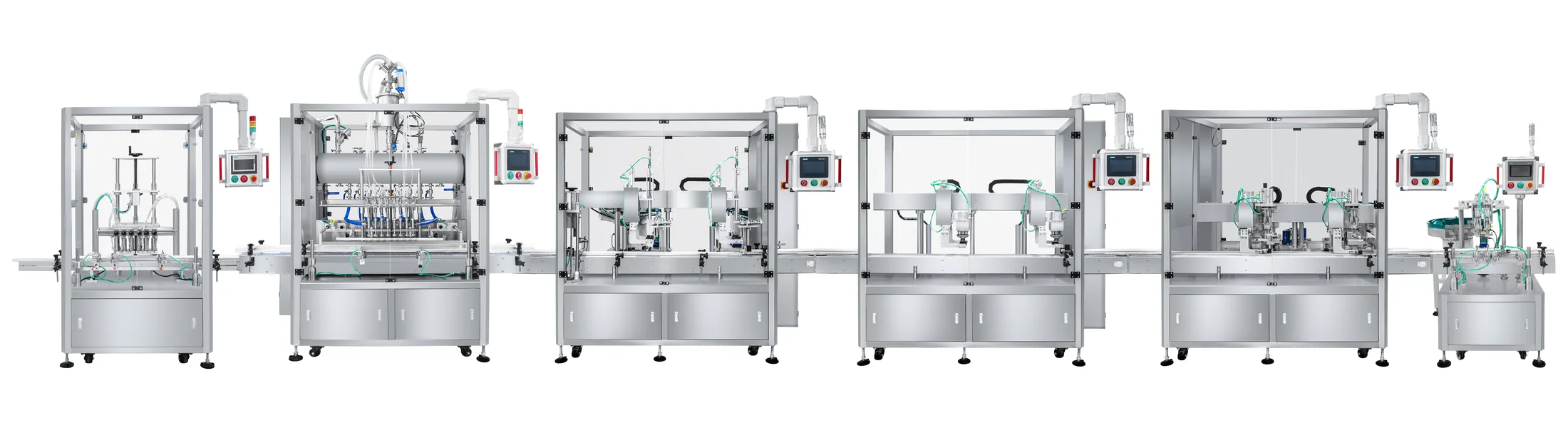
ZXSMART's published automatic perfume packaging-line reference includes a filtered-air bottle-rinsing station before vacuum filling. That documented configuration is one engineering example, not a universal requirement for cosmetics and not a sanitization claim. Other projects may use direct controlled feeding, a different preparation module or a buyer-supplied upstream process.
Keep machine cleaning separate from container preparation. The liquid filling machine cleaning and changeover guide covers the product-contact path inside tanks, pumps, hoses, valves and nozzles. A clean filler does not prove that incoming bottles are suitable, and a prepared bottle does not prove that the filler is clean.
6. What to Put in the RFQ or User Requirement Specification
A supplier cannot select or quote the right preparation station from the phrase “clean the bottles.” Provide a decision-ready package:
- Cosmetic product type, preservation approach as defined by the buyer, fill volume and sensitivity to water or residues.
- Bottle or tube material, dimensions, neck opening, shape, stability, decoration and maximum acceptable marks.
- Incoming packaging method: sealed bags, trays, cartons, bulk bins or reusable containers.
- Expected contamination or defect: loose particles, fibers, visible dust, moisture, chemical residue or another defined risk.
- Approved preparation method and prohibited media, temperatures or chemicals.
- Plant utilities, including air-quality specification, water specification, extraction and drainage.
- Room controls, depacking boundary and maximum uncovered transfer or hold time.
- Required accepted bottles per minute, batch size, format-change frequency and available floor space.
- Inspection, sampling, test method, acceptance limit, records and release responsibility.
Then map the preparation station to the filler, closure handling, labeler and conveyors using the complete bottling line buyer guide. The accepted whole-line output should be measured at the agreed discharge point, not inferred from the nominal speed of one station.
7. Test the Complete Preparation-to-Filling Process
A factory acceptance test should demonstrate the agreed action with representative packaging. It should also reveal whether the added station creates unstable handling, moisture, scratches, recontamination or a new bottleneck.
The buyer should approve the protocol before testing and retain the result with the project record. Use the ZXSMART factory acceptance test framework to define inputs, run conditions, evidence and open items. Site acceptance should repeat the critical checks after installation with the actual utilities and room conditions.
Define the Container-Preparation Scope Before Quotation
Send the cosmetic product, bottle or tube drawings and physical samples, closures, incoming packaging method, approved cleanliness requirement, target output, factory utilities and acceptance method. ZXSMART can review how a preparation step would connect with filling, capping, labeling and conveying. The final process and hygiene claim remain subject to the buyer's quality requirements and agreed tests.
Send Packaging and Process Details8. Buyer FAQ
Do all cosmetic bottles need to be washed before filling?
No universal rule applies to every package and product. Define an incoming-packaging specification and risk-based preparation procedure with the packaging supplier and quality team. Supplier-controlled containers may be handled without wet washing when the approved procedure and evidence support that route.
Is filtered-air bottle cleaning the same as sanitizing or sterilizing?
No. Filtered-air or vacuum cleaning can help remove loose particles when designed and verified for the container, but it does not by itself prove a sanitization or sterilization result.
Can cosmetic bottles be rinsed with water before filling?
Only when water quality, container compatibility, drainage, drying, residues, hold time and acceptance checks have been defined. A wet rinse can add moisture and another contamination route if it is not controlled.
Where should a bottle-cleaning station go in a cosmetic filling line?
Place the approved preparation step after controlled depacking and before filling, while protecting the cleaned opening during transfer. The exact sequence depends on container orientation, cleaning method, inspection, accumulation and the room-control plan.
What information should a buyer provide for a container-preparation station?
Provide the cosmetic product, bottle material and dimensions, neck opening, incoming packaging condition, expected contaminants, approved cleaning method, utilities, drying requirement, room conditions, target accepted output and the test evidence required for acceptance.
Research Notes
Fresh public Reddit discussions were reviewed on September 9, 2026 to identify how formulators and small manufacturers describe uncertainty about packaging cleanliness, tap-water contamination, drying and automatic bottle handling. The comments were treated as question signals only; they are not ZXSMART customer cases, endorsements, validated cleaning instructions or proof of machine performance. This guide does not copy the comments or recommend unverified home methods.
- Reddit: cosmetic makers ask whether new packaging should be sanitized before filling
- Reddit: a cosmetic-tube discussion highlights concern about rinse water, residues and drying
- Reddit: a small manufacturer compares manual handling with a connected filling and capping line
- FDA: Good Manufacturing Practice guidelines and inspection checklist for cosmetics
- FDA: Microbiological safety and cosmetics
How This Guide Is Reviewed
Reviewed by the ZXSMART Engineering Team against the published perfume-line configuration, current complete-line scoping process, product and packaging information checklist, cleaning/changeover guidance and factory-acceptance framework. Final container preparation, utilities, hygiene claims, line layout and acceptance criteria depend on the buyer's actual product, packaging, quality plan and market requirements.