
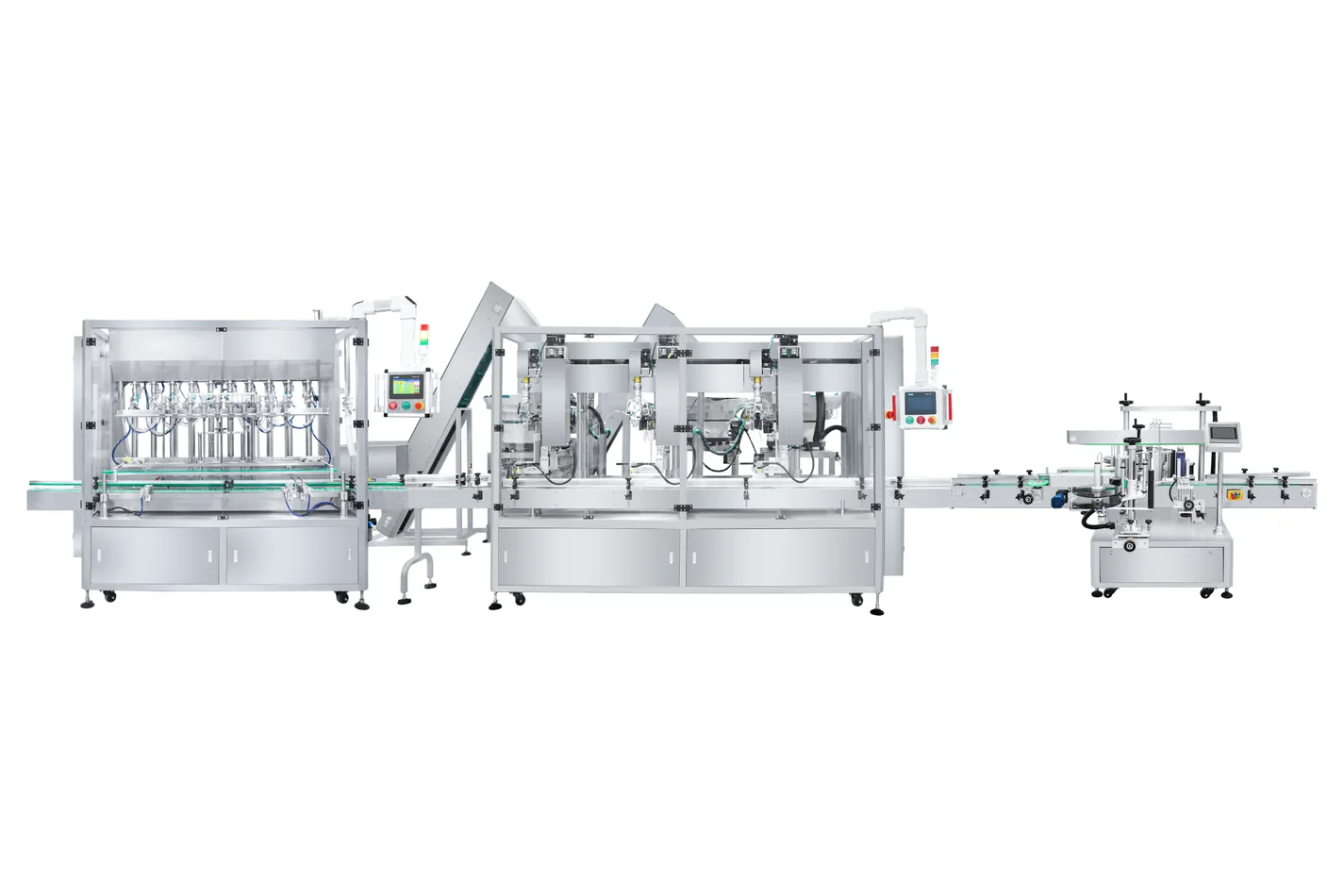
Contract filling is worth evaluating when you want an outside provider to perform a defined packaging operation. In-house filling is worth evaluating when you can staff, maintain and manage that operation yourself. Neither route is automatically cheaper or better: the decision depends on your actual products, packaging, production schedule and responsibilities.
Before comparing quotations, give both suppliers the same product-and-package brief. A low filling price is not a complete outsourcing quotation, and a machine price is not the complete cost of running your own operation.
1. Define what you are outsourcing—or bringing in-house
Do you need someone to make the bulk product, fill an already prepared product, assemble the closure, apply labels, or carry out all of those steps? Write the scope down. Do not assume that a supplier offering contract filling also handles formulation, product testing, packaging procurement or finished-batch approval.
For each step, name the responsible party and the evidence required before moving to the next step:
- Bulk product: who supplies it, and who confirms it is ready for filling?
- Containers and closures: who purchases them and checks incoming components?
- Filling and closure assembly: who establishes settings and checks the result?
- Labels and coding: who approves the artwork, position and batch information?
- Cleaning and changeovers: who performs them and records completion?
- Finished goods: who handles inspection, rejected units, storage and dispatch?
This responsibility list matters for both routes. Equipment ownership does not automatically supply the staff, procedures or expertise needed to manage those tasks. This guide compares packaging operations; it is not a product-safety or market-compliance assessment.
2. Compare the same requirements
| Decision point | Ask a contract filler | Ask about an in-house operation |
|---|---|---|
| Minimum run | Is the minimum per formula, container size, label version or order? | Can the proposed setup handle your batch sizes without disproportionate changeover time? |
| Scheduling | What booking, cancellation and urgent-order terms apply? | Who will operate the equipment, and what happens during absence or downtime? |
| Packaging fit | Can the actual bottle, closure and label run, and are format parts charged separately? | Which sample combinations are included in the equipment quotation? |
| Changeovers | What is included when changing formula, volume or packaging? | Which parts, cleaning steps and adjustments are required? |
| Quality checks | Who checks output, records rejects and resolves a disputed batch? | Who performs those checks and maintains the records internally? |
| Working capital | What deposits, packaging commitments and inventory are required? | What equipment, premises, materials and spare-parts commitments are required? |
An unanswered item is a quotation gap, not a reason to assume the cheaper option covers it.
3. When contract filling deserves serious consideration
If demand is uncertain, first obtain a written outsourcing quotation for your intended batch size. Check whether minimum-run requirements create inventory you cannot confidently sell. Also ask whether a smaller run changes the per-unit charge or requires a different packaging format.
If you have no established production team, compare the work the provider actually accepts with the work that remains yours. A service can reduce the activities you perform internally, but only within its agreed scope.
Packaging flexibility is another decision point. Before ordering a custom bottle or decorative closure, ask the filler to review physical samples. Do not commit to a large packaging order on the assumption that an attractive container will fit an existing line.
Keep scheduling in the comparison. A quotation that meets your unit-cost target but cannot meet your required production dates may not meet your business needs.
4. When an in-house line deserves serious consideration
Evaluate an in-house line when you have a sufficiently defined production plan and can assign responsibility for operating it. Prepare a list of products and package formats, quantities per batch, planned changeovers and available working hours.
Then identify the practical gaps: space, utilities, operators, cleaning arrangements, maintenance support and handling before and after the equipment. Ask which of these are included in the quotation and which must be arranged separately.
Do not size a line from the most optimistic sales forecast alone. Compare a lower-demand plan, an expected plan and a higher-demand plan. Check whether the proposed configuration still makes operational sense when demand is lower or the product mix changes.
If you decide to bring filling in-house, the next question is whether different products should share equipment or use separate lines. That is a separate decision covered in multi-product filling equipment versus a dedicated line.
5. Build a like-for-like cost worksheet
Use the same planning period, product mix and expected number of saleable units for both options. Separate one-time cash commitments from recurring operating costs, and avoid counting the same equipment cost twice.
For contract filling, request itemized figures for setup, filling, closure handling, labeling, changeovers, packaging handling, transport, storage and any minimum-run commitment. Mark exclusions clearly.
For an in-house operation, list equipment, delivery, installation, training, format parts, staffing, utilities, cleaning materials, maintenance and expected packaging losses. Include premises-related costs where applicable. The filling-machine cost guide helps identify equipment quotation items; it does not replace your operating-cost worksheet.
Divide comparable period costs by expected saleable units—not simply the number of bottles entering the line. Keep uncertain figures blank until you have a quotation or a documented assumption. There is no defensible universal bottle count at which owning a line becomes the cheaper route.
Ask what happens if the forecast is wrong. For outsourcing, this could change order size, inventory commitments or booking plans. For an in-house operation, it could change equipment utilization and staffing requirements. Record those consequences alongside the base comparison.
6. Use actual packaging samples before committing
Treat a package as a complete combination: product, fill volume, bottle or jar, closure and label. Confirm the combinations you intend to run rather than asking whether a machine handles “cosmetics” in general.
ZXSMART's cosmetic packaging solutions describe filling, closure handling and labeling modules selected for the supplied product and packaging. That does not mean one fixed configuration suits every serum bottle, cream jar or closure.
Before requesting a proposal, assemble:
- Product information relevant to handling, including flow behavior and any known foaming or material-compatibility concerns.
- Intended fill volumes and representative batch sizes.
- Container and closure samples, dimensions and available drawings.
- Actual label samples or specifications.
- Required output, working hours and planned format changes.
- Checks you want demonstrated and limits that need agreement.
Use the bottle, cap and label sample guide to prepare the enquiry. Agree the factory acceptance test scope before an order: what will be tested, which samples will be used and what records will be provided. A demonstration of one package should not be treated as proof for every format on your list.
7. Make a staged decision, not an all-or-nothing promise
You can compare routes product by product. For example, assess a stable product separately from a new product whose formula or packaging is still changing. This is a planning option, not a claim that a particular supplier offers split production or guaranteed overflow capacity.
Before moving production, define how you would test the new route, compare the output and handle any interruption. Confirm any continuing support or backup arrangement in writing. Do not assume a former provider will retain capacity for you.
Choose the route whose responsibilities, operating requirements and costs you can actually support. Revisit the comparison when your demand, packaging or product mix changes.
Frequently asked questions
How many bottles justify an in-house cosmetic filling line?
There is no universal threshold. Compare written quotations against your expected batches, product mix, available staff and saleable output. A single annual volume figure leaves out changeovers and operating requirements.
Is contract filling the same as contract cosmetic manufacturing?
Do not assume the scopes are identical. Ask whether the quotation includes making the bulk formula or only packaging supplied product, and specify who handles each related check and approval.
Can one line run both serum bottles and cream jars?
It must be assessed against the actual product, container, closure and label combinations. Do not treat an industry label or a photograph as confirmation that one unchanged configuration handles both.
Should I buy the bottles before selecting the production route?
Obtain samples early, but ask the proposed filler or equipment supplier to assess compatibility before committing to a large packaging order. Confirm which formats and parts are covered in writing.
What should I send ZXSMART for an in-house proposal?
Send product details, fill volumes, container and closure samples or drawings, label specifications, batch requirements and target output. Request a packaging-equipment proposal for your actual application. The quotation should identify confirmed scope and unresolved sample checks.
This editorial guide describes procurement questions. Equipment suitability requires application-specific engineering confirmation using your product and packaging samples.
Compare equipment scope for your actual packaging
Send your product, container, cap, label and production requirements for engineering confirmation.
Request a packaging-equipment proposal