
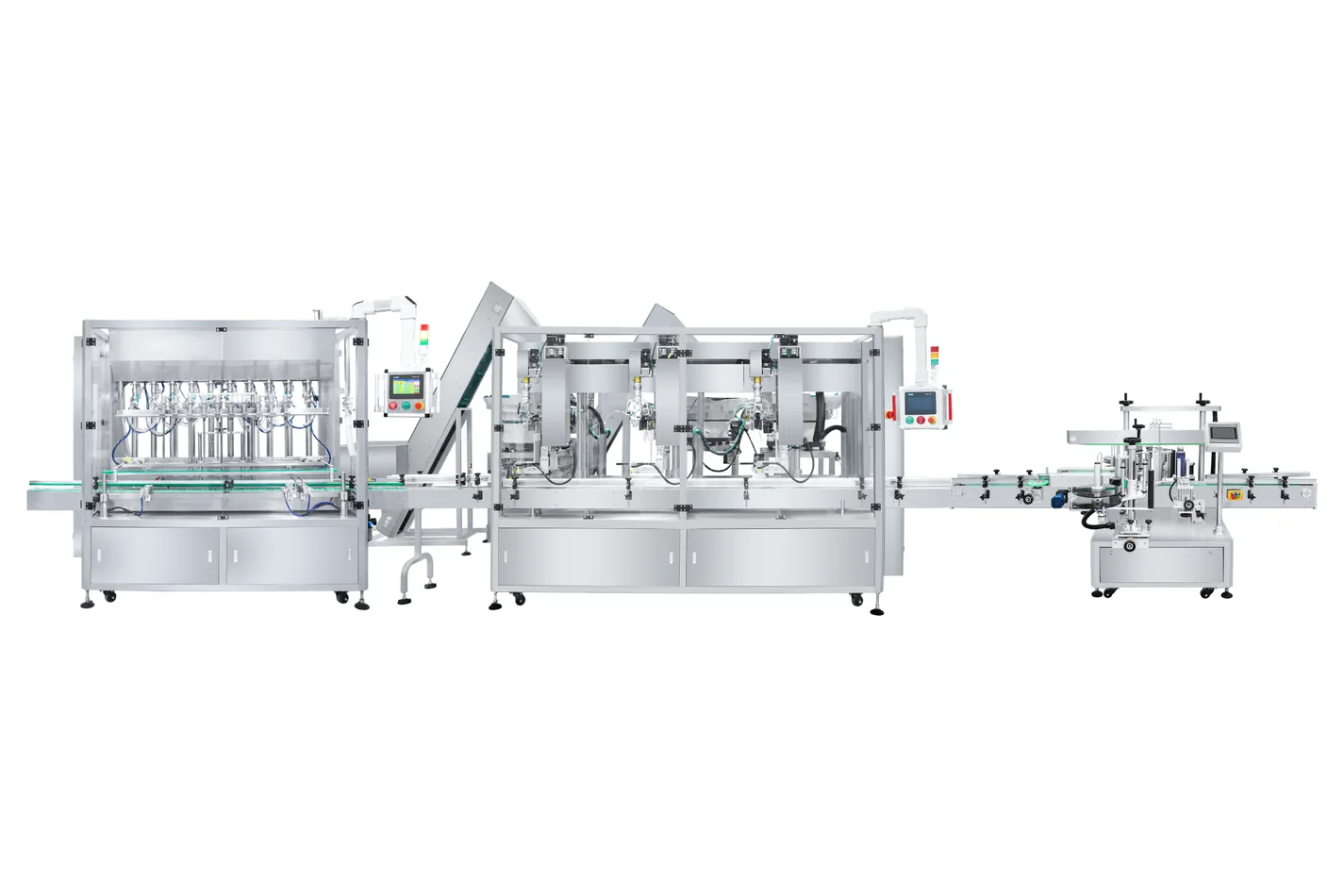
A product portfolio can sometimes share one filling platform. That does not mean every product should share one product path or every package will run with a simple setting change. The better purchase depends on the product family, batch pattern, cleaning requirement, bottle and closure formats, usable output and the cost of keeping production available.
1. Start With a Product and Package Portfolio Matrix
Do not begin with the number of machines. Begin with one row for every product-and-package family that must be produced. Products with the same marketing category can behave differently in a filler. Bottles with the same nominal volume can also require different guides, nozzles, filling positions, cap handling or label control.
| Input | What the buyer records | Decision it affects |
|---|---|---|
| Product | Flow behavior at filling temperature, foam, particles, stringing or dripping, concentration and known residue concerns. | Filling principle, pump or piston range, nozzle design, product supply and contact materials. |
| Fill range | Every required volume, normal batch size and production share. | Whether one metering range is practical or different cylinders, pumps, nozzles or recipes are needed. |
| Container | Material, dimensions, neck position, opening, rigidity, base and filled stability. | Guide rails, indexing, bottle positioning, nozzle clearance and transfer method. |
| Closure and label | Cap, pump, trigger, plug, liner, label drawing, roll direction and orientation requirement. | Whether downstream stations can share the format or need dedicated feeding, tooling or another station. |
| Work pattern | Batch frequency, product sequence, required output, seasonal peaks and available operators. | Whether flexibility creates value or repeated changes remove too much usable time. |
| Factory conditions | Space, line direction, power, air, product supply, drainage and cleaning utilities. | Whether shared modules, parallel equipment or a staged layout can be installed and supported. |
Use the ZXSMART container, closure, label and product information guide to collect the initial data. Mark each format as shared adjustment, dedicated change part, dedicated product-contact set or unconfirmed. The word “adjustable” should never replace a format-by-format answer. The bottling-line change-parts guide provides a practical way to separate adjustments from dedicated parts and unconfirmed items.
2. Shared Multi-Product Platform vs Dedicated Equipment
| Decision factor | Shared filling platform | Dedicated product-contact set, module or machine |
|---|---|---|
| Best fit | Compatible product families, controlled formats, shorter or irregular campaigns, and limited floor space. | High-use products, incompatible residues or materials, difficult cleaning, different dosing principles, or an important SKU that must remain available. |
| Changeover load | Requires a documented sequence for draining, cleaning, parts, guides, recipes and first-article checks. | Can reduce shared changeover work, but still needs controlled setup and verification. |
| Availability | One asset is shared across SKUs; every assigned product is affected while it is being changed, cleaned or repaired. | Production can be separated by product or format, but the extra equipment must be justified by real demand. |
| Flexibility | Useful only inside engineered filling, volume, bottle and downstream ranges. | Optimized around a narrower confirmed scope; future formats still require review. |
| Maintenance risk | A single failure can affect every SKU assigned to the platform. | A problem may be contained to one scope, although more assets create more maintenance items. |
| Investment review | Fewer base machines may reduce initial scope, but include change parts, changeover time, labor and product loss. | More base equipment and space; compare the value of availability, simpler release and stable campaigns. |
There is no universal winner. A useful quotation makes the boundary visible: which product-and-package combinations are approved, what must be changed, what remains installed, what is dedicated, and what has not been tested.
3. Pass Four Engineering Gates Before Sharing Equipment
Gate 1: Can the products share a filling principle?
Compare the most difficult credible conditions, not only the easiest liquid. Viscosity, foam, particles, temperature, cutoff behavior and required fill range influence the filling method. A system selected for freely flowing oil should not be assumed to cover thick lotion or a product with particles without a separate review.
The broad filling-machine selection guide explains how product behavior affects the initial method. Review the current ZXSMART filling-machine range only after the product and package matrix is clear. This portfolio decision begins after each product has a technically suitable dosing direction.
Gate 2: Can the complete product path be separated and released?
List everything the product touches: supply tank or feed connection, hoses, pump or cylinder, valves, manifold, seals and nozzles. The buyer's qualified product, quality and safety teams must define the approved separation and cleaning result. Some portfolios can share a path with a controlled procedure. Others need dedicated hoses, tanks, pumps, nozzles, product-contact sets or separate machines.
Use the existing liquid filling machine cleaning and changeover guide for the procedure itself. The decision here is only whether that procedure is practical at the planned batch frequency.
Gate 3: Do the packages fit a controlled format range?
Fill volume alone is not enough. Check bottle height, width or diameter, neck location, opening, rigidity, base and filled stability. Confirm nozzle spacing and clearance, indexing or tracking method, guide range and discharge. Then review cap feeding, capping, labeling and coding. A filler can accept a bottle while the complete line cannot.
Gate 4: Does the changeover preserve usable production time?
A platform can be technically capable of multiple SKUs and still be the wrong commercial choice. Count the time for product recovery, cleaning, inspection, drying or clearance, parts replacement, recipe selection, guide adjustments, priming, first-article checks and operator release. Compare that total with the length and frequency of each production campaign.
4. When a Shared Filling Platform Makes Sense
A shared project can also be staged. The existing semi-automatic versus automatic filling guide keeps the automation decision separate from the portfolio-allocation decision. Shared scope does not require automating every task at once.
5. When Dedicated Scope Is Easier to Justify
- Products require different filling principles or incompatible product-contact materials.
- The approved product-separation plan is difficult to repeat on one shared path.
- A major SKU needs continued production while another product is being changed or tested.
- Bottle, closure or label formats require incompatible handling structures.
- Frequent short campaigns spend more scheduled time in changeover than the shared platform can recover.
- A future format is still uncertain and should not be included as confirmed capability.
Dedicated does not always mean a completely separate production line. The correct boundary may be a dedicated hose-and-nozzle set, a separate product supply module, format-specific filling components, a dedicated capping tool, or a separate filler connected to shared downstream equipment. The scope should follow the risk and economics of the actual project.
6. Count Changeover Load, Not Only Machine Price
Apply the equation to every planned SKU. Then compare good finished containers, not filler-only cycles. If a shared station is unavailable, every product assigned to it is affected. If dedicated equipment is lightly used, its extra capacity may not create enough value to justify the additional scope.
The decision should include:
- Product recovered, held or discarded during each change.
- Cleaning materials, utilities and disposal handled under the buyer's approved procedure.
- Operator time for disassembly, setup, inspection and first-article release.
- Parts and storage needed for each product-and-package family.
- Production impact when one shared station is unavailable.
- Floor space, utilities and maintenance responsibility for additional equipment.
7. Use the Same Scope to Compare Supplier Proposals
- Attach one controlled product-and-package matrix to every request for quotation.
- Ask the supplier to mark each row approved, conditional or unconfirmed.
- Identify the filling principle, range and product-contact materials for every product family.
- List shared adjustments, dedicated product-contact sets, format parts and optional modules.
- Describe every product recovery, changeover and first-article step the machine design requires.
- List bottle, cap, label and transfer changes across the complete line, not only the filler.
- State operator tasks, utilities and material replenishment at the proposed sustained output.
- Define spare and wear parts, drawings, manuals, training and support responsibility.
- Specify which representative products and formats will be tested before shipment.
- Separate proven capability from a future option that still needs samples and engineering review.
For a complete filling, capping and labeling project, review the current ZXSMART complete packaging line scope. Its configured stations should follow the product, container, closure, label, target output and factory conditions rather than a fixed industry package.
8. Verify the Portfolio Decision During FAT
A representative factory acceptance test should prove the boundaries written in the quotation. Do not test only the easiest product or the most stable bottle.
- Select agreed easy and difficult products, minimum and maximum fills, and least stable package formats.
- Confirm approved substitutes if production material cannot be supplied for the factory test.
- Record the installed product-contact set, format parts, recipes and mechanical settings.
- Run each representative format long enough to observe normal replenishment, stops and restarts.
- Record accepted finished output, rejects, drips or foam, bottle handling, cap result, label result and operator interventions.
- Perform an agreed product or format change using normal tools, people and approved procedures.
- Record the last accepted unit before the change and the first accepted unit after release.
- Save deviations, corrections, retest evidence and the exact boundary of untested formats.
Compare Shared and Dedicated Filling Scope
Send the planned product family, fill volumes, bottles, closures, labels, batch sizes, changeover frequency, target accepted output and factory conditions. ZXSMART Engineering can identify what may be shared, what may need dedicated product-contact or format parts, and what still requires samples and testing.
Send Product and Package Details9. Buyer FAQ
How should a product portfolio be split between shared and dedicated filling equipment?
Build a product-and-format matrix, then group SKUs that can share a compatible filling principle, product-contact materials, approved format range and verified changeover. Assign dedicated contact sets, modules or separate equipment where incompatibility, high-volume availability or changeover load makes sharing difficult to control.
Does a multi-product project need one complete line for every SKU?
Not necessarily. A project may share selected stations while using dedicated product-contact sets, container-handling parts, closure or labeling scope, or complete equipment where required. Decide station by station from the format matrix and representative factory testing.
When is a dedicated filling machine usually the better choice?
Dedicated scope becomes easier to justify when products are difficult to separate or clean, package formats require incompatible handling, one high-volume SKU must stay available, or shared changeovers consume too much scheduled production time.
Is one flexible filling machine always cheaper than dedicated equipment?
No. Compare total usable output and responsibility, including change parts, product-contact sets, cleaning time, product recovery or waste, startup checks, labor, downtime and future modifications. A lower initial equipment count can still create higher operating cost.
What should be tested before approving shared or dedicated filling scope?
Test representative easy and difficult products, minimum and maximum fills, least stable bottles and required closures and labels. Record installed parts, settings, changeover steps, first accepted units, sustained accepted output, rejects, stops and operator interventions.
Research Notes
Public Reddit discussions were reviewed in the user's logged-in browser on September 14, 2026 to understand how buyers describe versatile versus specialized equipment, small and irregular batches, product loss, changeover work, support, repairability and usable operator output. These discussions were used only as question and language signals. They are not ZXSMART customer cases, endorsements, verified performance claims or universal engineering instructions.
- Reddit: beverage-industry buyers discuss supplier questions, difficult products, wear parts, utilities, support and usable output
- Reddit: small-batch buyers compare temporary low-cost equipment with support, repairability and long-term reliability
- Reddit: short-run producers compare versatile equipment with more specialized scope, labor, downtime and repair support
- Reddit: cosmetics producers discuss frequent product changes, priming loss, cleaning and product waste
How This Guide Is Reviewed
Reviewed by the ZXSMART Engineering Team against the current filling-machine selection process, complete-line scope, product-and-package information workflow, cleaning and changeover boundary, monoblock change-parts classification and factory-acceptance framework. Final filling principle, product-contact scope, format parts, accepted output and test criteria depend on the buyer's actual products, containers, closures, labels, schedule and factory conditions.