
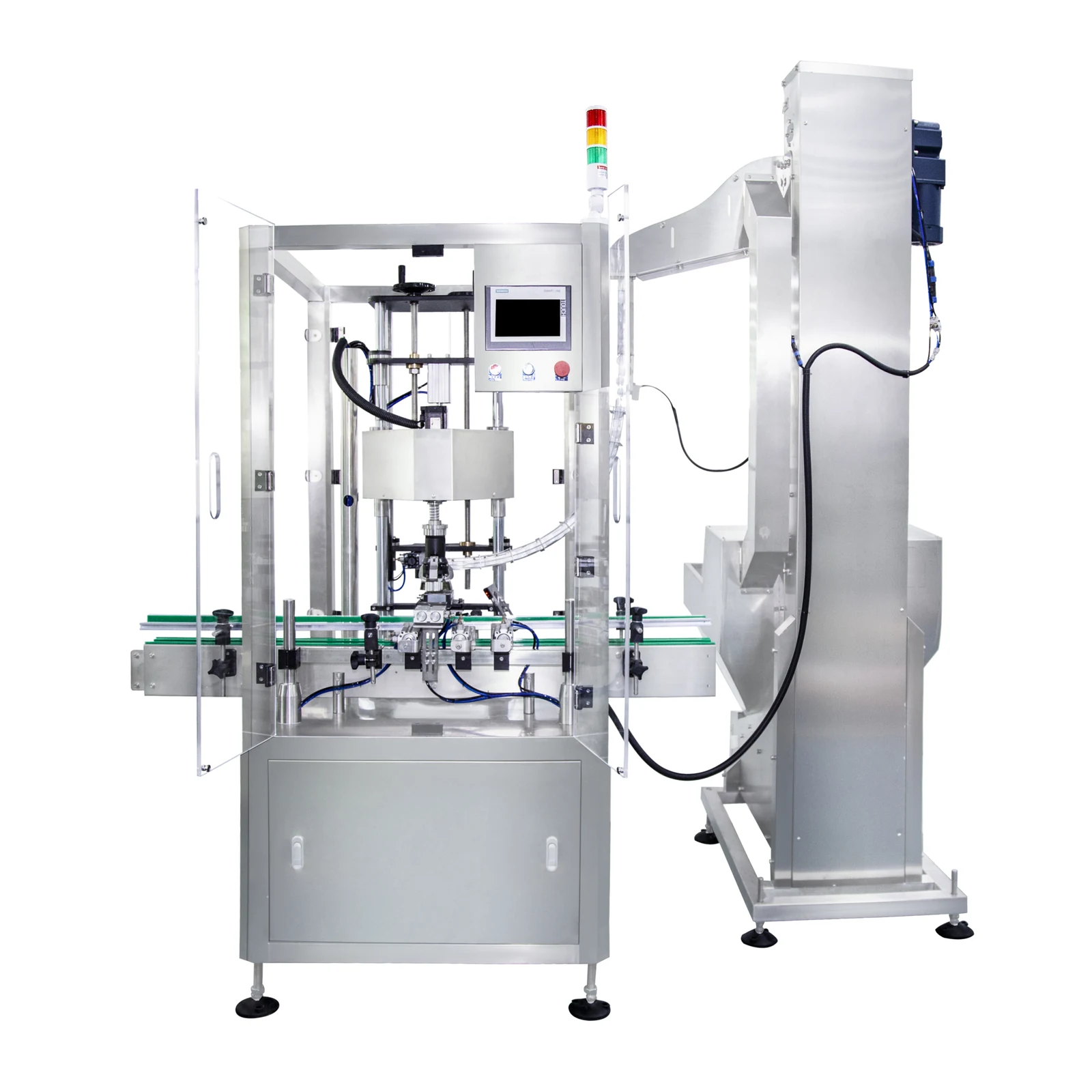
Single-Head Servo Pick-and-Place Chuck Capping Machine
Servo-controlled cap pickup, placement and tightening for threaded plastic caps and tamper-evident closures.
Controlled Cap Pickup, Placement And Tightening

One capping head with servo torque control
The machine picks one cap, places it on the bottle and applies controlled tightening torque. The cap feeding system is selected from actual cap samples, while bottle guides and gripping parts are adjusted to the container.
Suitable Applications And Important Limits
Suitable For
- Round or flat PET, PE and glass bottles
- Threaded plastic caps
- Tamper-evident caps
- Products requiring controlled servo torque
Confirm Another Configuration For
- Press-on or snap caps
- Press-and-turn closures
- Eccentric or highly irregular caps without testing
- Soft thin-wall bottles without dedicated support
Single-Head Servo Pick-and-Place Chuck Capping Machine Running Test
Real machine footage showing automatic cap feeding, pickup, placement and servo torque capping.
Open Running Video →Single-Head Machine Specification
Specifications below are based on the supplied machine configuration. Bottle, closure and product samples are reviewed before final engineering confirmation.

How Single-Head Pick-and-Place Chuck Capping Works
Frequently Asked Questions
Do you need cap and bottle samples?
Yes. Actual bottle, cap and liner samples are required to confirm gripping, placement, torque and changeover parts.
Can the machine connect to an existing line?
Yes. Conveyor height, line direction, upstream spacing and downstream equipment must be confirmed.
Can it handle every cap shape?
No. Cap shape, stiffness and balance affect suitability. Use your actual caps and matching bottles to check that each cap keeps the correct orientation after pickup, sits straight on the bottle neck and starts on the threads without cross-threading.
Send Your Product, Container And Closure Details
We will review the product behavior, container dimensions, closure geometry, target output and factory conditions before recommending the final configuration.