
Bottom Labeling Machine For Base Labels And Product Identification
Automatic bottom label application solution for containers requiring label placement on the base surface.
What Is This Machine Used For?

Label placement on the bottom surface of containers
Bottom labeling machine applies labels to the base surface of bottles or containers. It is useful for product identification, barcode labels or special packaging requirements.
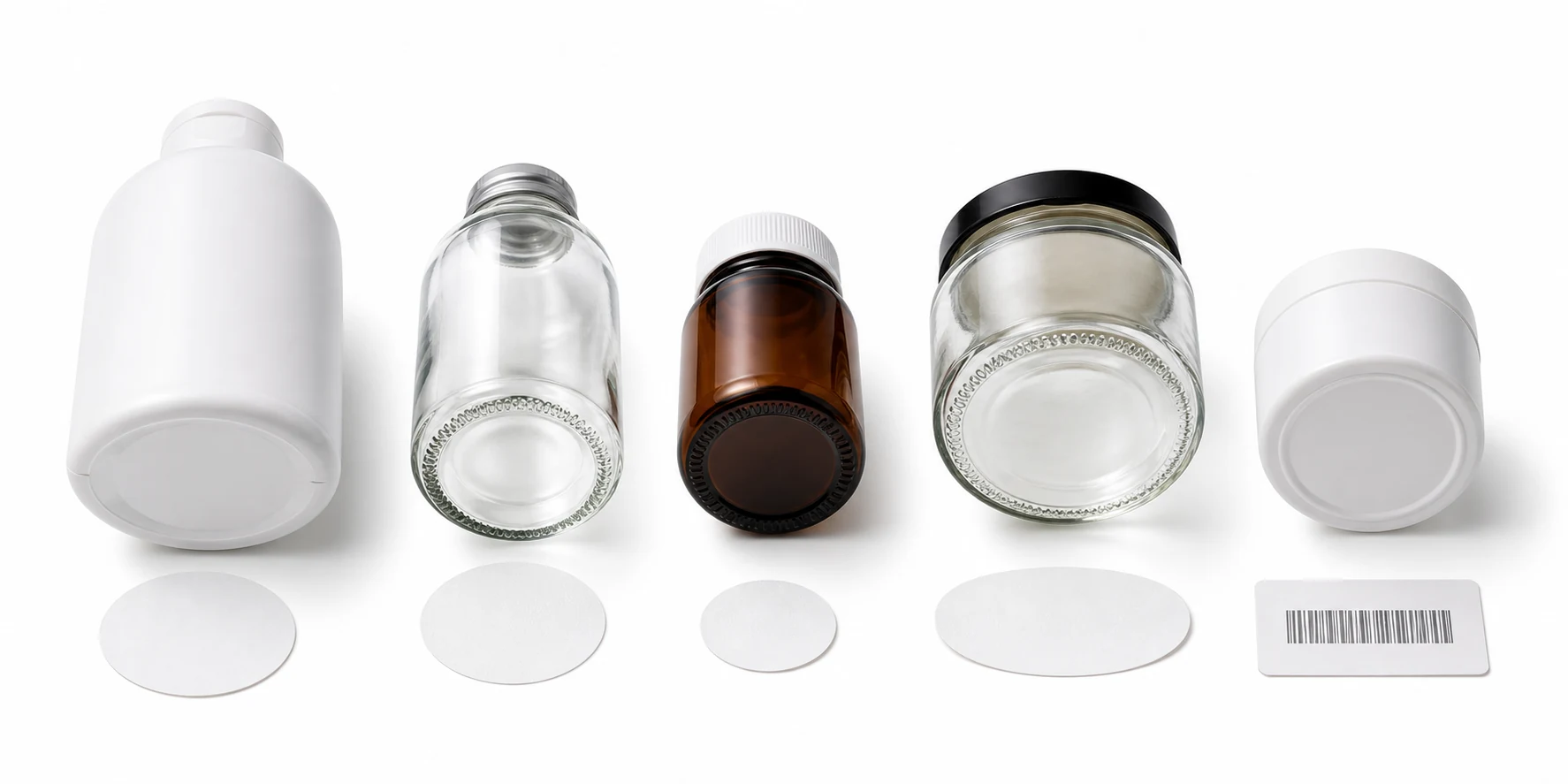
Container Base And Bottom Label Examples
These examples show stable containers with flat, clean base surfaces suitable for product-identification, barcode or other bottom labels.

Suitable And Not Recommended Bottles
Suitable Containers
- Round plastic bottles
- Round glass bottles
- Bottle diameter: 20-110 mm
- Bottle height: 100-300 mm
- Daily chemical, pharmaceutical and food packaging
Not Recommended For
- Containers outside the 20-110 mm diameter or 100-300 mm height range
- Unstable containers without reliable support
- Uneven or unclean bottom surfaces
- Side or wrap-around label applications
- Lines above 50 bottles/min without a dedicated sample test
Bottom Labeling Machine Configurations

What Should Be Confirmed Before Selection?
Same Core Structure
- Bottom label applicator
- Conveyor support structure
- Label peeling system
- Sensor detection
- Line integration capability
Need To Confirm
- Bottom surface shape
- Container stability
- Label size and position
- Conveyor height
- Need for top holding
Recommended Container Types And Label Connection
Recommended Containers
- Flat-bottom bottles
- Cosmetic containers
- Product boxes after testing
- Plastic trays
- Barcode label products
- Special ID label containers
Bottle / Label Matching Notes
| Bottle Or Label Type | Recommended Labeling Structure |
|---|---|
| Round bottles | Wrap-around or positioning labeling |
| Flat bottles | Single side or double side labeling |
| Square bottles | Front/back labeling with guides |
| Bottom label | Bottom conveyor and label applicator |
| Shrink sleeve | Sleeve labeling and shrink tunnel |
How The Bottom Labeling Machine Works
The labeling machine can work as a standalone labeling unit, or connect with filling, capping, coding and collecting systems to build a complete packaging line.
Why Choose Bottom Labeling?
Main Advantages
- Applies labels to container base
- Good for barcode or ID labels
- Can be integrated with conveyors
- Customizable by product sample
Production Benefits
- Reduces manual bottom labeling
- Supports special packaging requirements
- Can connect with upstream/downstream equipment
- Improves label consistency
Comparison With Other Labeling Methods
| Labeling Method | Best For | Selection Note |
|---|---|---|
| Round Bottle Labeling | Round bottles and wrap-around labels | Best for cylindrical bottles |
| Flat Bottle Labeling | Flat bottles and front/back labels | Best for flat or square containers |
| Double Side Labeling | Front and back labels on flat or square bottles | Best when two label faces must be applied in one process |
| Bottom Labeling | Bottom surface label placement | Best for product identification labels |
| Sleeve Labeling | Shrink sleeve and full-body packaging | Best for full wrap visual packaging |
| Star Wheel Round Bottle Labeling | Higher-speed round bottle handling | Best for stable bottle transfer and positioning |
What You Receive Before Final Configuration
Start with photos, dimensions, product behavior, filling volume and target output for your Bottom Labeling Machine For Base Labels And Product Identification. Physical containers, closures, labels or product are requested later only when tooling or factory testing requires them.
- Recommended configurationMachine type, head or station quantity and required options.
- Preliminary layoutMachine sequence, interfaces, footprint and utility assumptions.
- Written quotationConfirmed scope, available options, exclusions and commercial terms.
- Test requirement listWhich physical items must be sent later for tooling and FAT, only when required.
How To Read The Published Bottom Labeling Machine For Base Labels And Product Identification Parameters
The website helps shortlist a machine. Final values are released only after the product, container, closure or label, required output and factory conditions are reviewed.
Container range
Bottle diameter, height, stability and orientation are checked with actual formats before the guide system is released.
Label range
Label size, roll direction, gap, backing paper and required position are confirmed from drawings or a physical roll.
Speed basis
A sustained bottles-per-minute target depends on container handling, label length, sensor response and line conditions.
Position result
Position tolerance, appearance, missing-label response and inspection method are agreed for the project FAT.
Final handover package
After configuration confirmation, the handover package supports installation, operation, maintenance and acceptance without publishing unconfirmed project values.
- Approved general arrangement or layout
- English operation manual
- Electrical diagram
- Pneumatic diagram where applicable
- PLC program backup
- Agreed FAT criteria and record
- Operation training
- Recommended spare-parts list
Common Questions Before Buying
What is bottom labeling used for?
It is used for labels placed on the bottom or base surface of containers.
Can it label round bottle sides?
No. Round bottle side labeling should use round bottle labeling machines.
Does the container need a flat bottom?
A stable and suitable bottom surface is important.
Can it be added to a line?
Yes. It can be integrated with conveyors and other equipment.
What information is needed for the initial review?
Provide container photos and bottom dimensions, label specifications, target speed and product details for the initial review.