
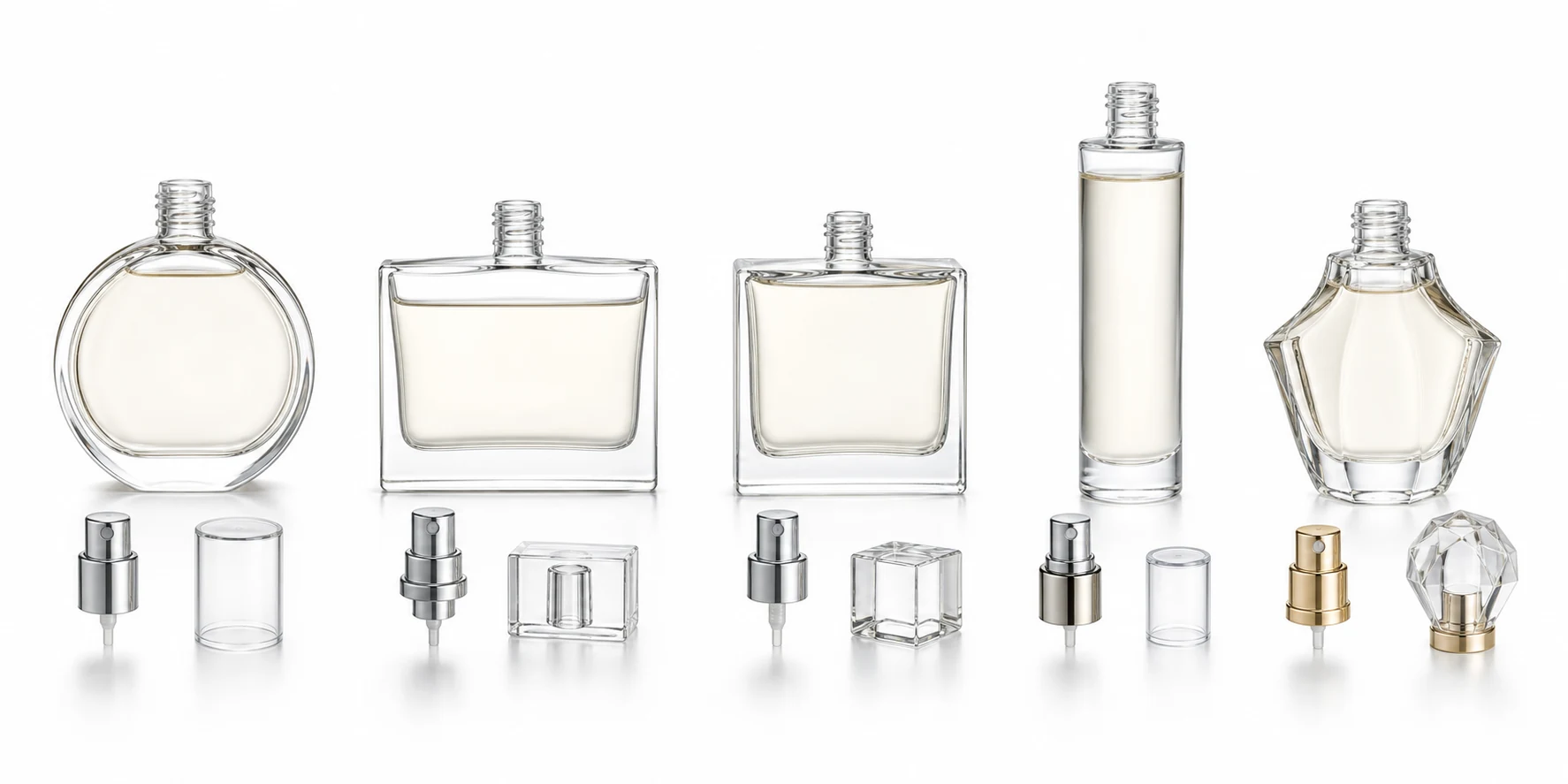
A moving decorative collar, a pump that moves on the neck and liquid escaping from a package are different observations. Keep them separate in the sample report. This guide helps buyers prepare evidence and quotation requirements; final settings and acceptance limits must come from the responsible component suppliers and a validated trial.
1. Separate Collar Movement, Pump Movement and Leakage
Do not turn a short video or a single leaking bottle into a confirmed root cause. Photograph the assembly, label the sample and record when the symptom appears. The following are questions for a supplier review, not diagnoses.
On small screens, scroll the table horizontally to read all three columns.
| Observed symptom | Record separately | Question for the review |
|---|---|---|
| Decorative collar moves | Which component moves, and whether the pump also moves or liquid appears. | What retention and cosmetic-fit criteria apply to this collar? |
| Pump assembly moves on the neck | Bottle and pump references, component lots, mounting method and tooling identification. | Are the components and assembly result within the suppliers' agreed specifications? |
| Liquid appears around the closure | Location, time, bottle orientation, product and handling conditions. | Which controlled test can distinguish leakage from filling residue or another source? |
| Only some samples fail | Passing and failing samples, lots, production sequence and recorded setup. | What comparison can isolate component or process variation without changing several factors at once? |
2. Confirm the Complete Bottle and Pump System
A nominal neck size alone is not a complete purchasing specification. Ask for the exact bottle-finish drawing, pump reference, ferrule specification and the tooling intended for that combination. Confirm the mounting method rather than treating every spray pump as interchangeable.
For example, Coster describes its MPE perfume pump as crimp-on. That identifies a mounting family, not compatibility with every bottle or a setting for your machine.
Cetie's public catalogue description of Guide No. 12 concerns tool-crimping aluminium ferrules on FEA glass finishes and excludes rolling with rotating heads. Check the intended process before applying guidance to another assembly method.
3. Prepare a Traceable Sample Record
Send both acceptable and suspect assemblies when available. Keep each sample linked to its component references and observations. A useful review pack includes:
- Bottle drawing, neck-finish specification and component lot identifiers.
- Pump, ferrule, decorative collar and overcap references, with their supplier specifications.
- Actual fragrance information and relevant handling requirements.
- Tooling identification and the recorded setup used to make the samples.
- Photos or video showing the exact moving part or liquid location.
- When the symptom occurs: after assembly, during storage or after handling.
- The agreed appearance, retention, function and leakage acceptance criteria.
Do not replace the fragrance with an easier test liquid and assume equivalent results. Any substitute and the limits of that trial should be agreed with the responsible technical team. Use the container, closure, label and product checklist to organize the wider project inputs.
4. Keep Leak Testing Separate From Appearance Checks
An acceptable-looking crimp does not document a leak-test result. Agree how the assembled package will be assessed and who approves the method. Cetie's public description of DT15.53 addresses liquid-tightness assessment of glass closure systems under handling, storage and transport conditions. It does not establish a ready-made acceptance limit for this project.
Ask the qualified packaging team to define the product, sample quantity, conditioning, orientation, duration, measurement and pass/fail criteria for the intended distribution conditions. Record the method and result alongside the assembly observations. This article does not provide a pressure recipe, certify compliance or substitute for the full applicable procedure.
5. Translate the Agreed Package Into a Clear Line Scope
When considering a perfume filling, capping and labeling line, list the required operations separately: bottle preparation, filling, pump insertion, the confirmed closure-assembly method, collar fitting, overcap placement, labeling and inspection. Identify manual, buyer-supplied and excluded operations.
If leak inspection is required, specify whether it is sampled offline or integrated into the line, together with result recording and reject handling. Do not assume a filling or crimping station includes it. Evaluate accepted output only after the package and acceptance method are agreed.
For the wider equipment decision, see the small-batch to automatic perfume filling guide. Send representative components and the observation record with your project inquiry; machine configuration remains subject to sample review and the quoted scope.
6. Buyer FAQ
Does a loose decorative collar prove the perfume pump is leaking?
No. Record collar movement, pump movement and visible leakage as separate observations. Ask the component supplier which parts provide retention and sealing before choosing a corrective action.
Can one crimp setting be used for every perfume bottle?
Do not assume so. The bottle finish, pump and ferrule specification, tooling and supplier-approved acceptance criteria must be reviewed together. This guide does not prescribe a universal crimp height, diameter or pressure.
Does an automatic perfume line include leak testing?
Only when it is explicitly included in the agreed scope. Specify the inspection method, acceptance criteria, sampling or inline arrangement and rejection process separately from filling and closure assembly.
7. Sources and Scope Limits
- Cetie: stepped FEA finish catalogue — public descriptions of Guide No. 12 and DT15.53; the full technical documents were not used as a substitute for project-specific review.
- Coster: MPE perfume pump — manufacturer identification of a crimp-on pump family.
- Public buyer discussion about a crimp atomizer — anecdotal question that informed this topic, not engineering evidence, search-volume data or a ZXSMART customer case.
The checklist is editorial buyer guidance. It does not claim a completed engineering sign-off, a confirmed cause for an individual leak, or that every listed inspection station is included in a ZXSMART quotation.