
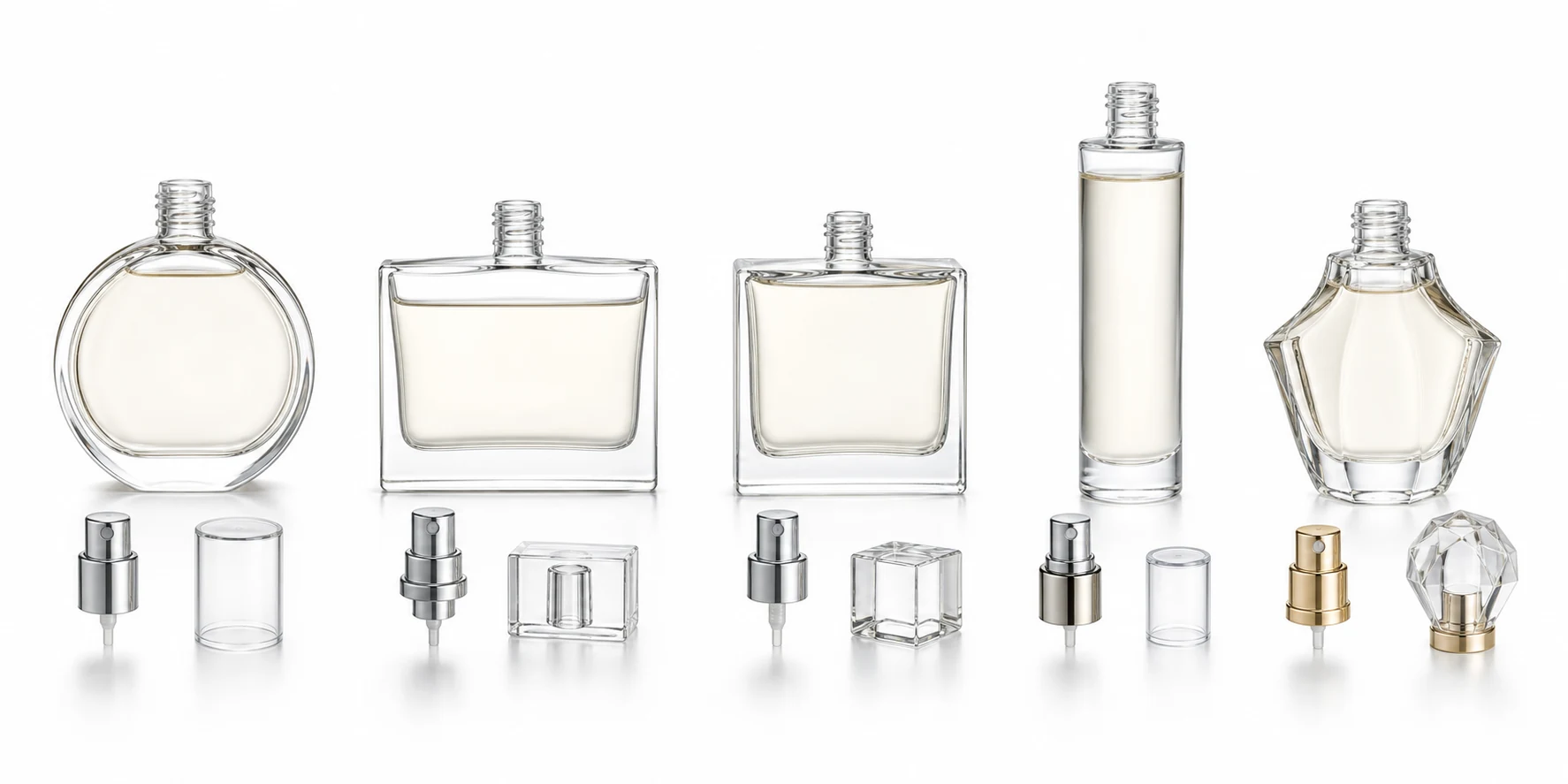
A perfume filling machine for a small business should remove the current production bottleneck without forcing an oversized line. For many growing brands, the first useful step is controlled semi-automatic filling while operators continue loading bottles and handling closures. A fully automatic perfume bottling line becomes reasonable only when repeat demand, package stability and sustained output justify automating bottle transfer, filling, closure handling, labeling and inspection.
1. Choose the Automation Stage From Real Production Work
Small perfume brands often ask whether they should buy a small filler now or go directly to an automatic line. The answer depends on where time and rejects are being created today.
| Production stage | Useful equipment direction | Evidence to collect before upgrading |
|---|---|---|
| Product validation and irregular micro-batches | Keep the process simple until the bottle, pump, label and demand are repeatable. Avoid automating an unstable package. | Batch frequency, bottle families, operator time, filling loss and closure or label rejects. |
| Repeat small batches | Evaluate a semi-automatic vacuum perfume filling machine for compatible fragrance liquid and bottles while keeping bottle loading and downstream work manual. | Achievable accepted bottles per shift, fill-level consistency, neck cleanliness and operator cycle. |
| Growing multi-SKU production | Automate the proven bottleneck first. This may be filling, bottle transfer, closure handling or labeling—not necessarily every step at once. | Time study by station, SKU changeover time, closure defects, label rejects and stoppage causes. |
| Stable repeat production | Evaluate an integrated line only after package components, line sequence and sustained output are defined. | Representative production run with accepted output, reject criteria, restart behavior and real changeover. |
This staged approach answers the practical question behind many small-batch perfume filling machine searches: buy equipment for the next verified constraint, not an imagined future volume.
2. Audit the Perfume Bottle, Spray Pump and Overcap Separately
A perfume bottle that looks standard may still need a container-specific holder, vacuum seal or conveyor guide. Closure components also vary: the spray pump, crimp or threaded collar, decorative collar and overcap can require different handling and force.
Do not assume that a perfume bottle filling and capping machine includes every closure operation. The semi-automatic perfume filler performs the filling step; its published page explicitly separates spray-pump and overcap handling. A quotation for a larger line should list every included station and every manual or buyer-supplied step.
3. Select a Filling Direction, Then Test the Actual Fragrance and Bottle
If the pump, collar or seal is already causing concern, use the perfume pump crimping and leak-check checklist to separate the observations and prepare component evidence before automating the package.
Perfume and compatible low-viscosity fragrance liquids are commonly reviewed for vacuum-assisted filling, especially when the visible fill level in a rigid bottle matters. The published vacuum filling machine family covers automatic configurations for suitable bottles. Pump-based dosing may also be evaluated for compatible small-volume liquids when the project requires a measured dose rather than equal-level filling.
| Filling direction | Useful when | What must be proved |
|---|---|---|
| Semi-automatic vacuum filling | Repeat small batches, operator-loaded bottles and compatible low-viscosity fragrance liquid. | Bottle seal at the nozzle, target level, cycle repeatability, neck cleanliness and operator ergonomics. |
| Automatic vacuum filling | Stable bottles and a line that needs automated bottle transfer with consistent visible fill level. | Container stability, level result, sustained speed, stop and restart behavior and product recovery. |
| Gear or peristaltic pump dosing | Compatible small-volume products where measured dosing and the selected product path fit the buyer requirement. | Dose basis, tubing or pump compatibility, priming, cutoff, cleaning and repeatability with the actual liquid. |
No method should be approved from the product name alone. Confirm fragrance composition, viscosity, volatility, compatibility, filling temperature, bottle opening and cleaning requirement. Avoid claims about explosion-proof suitability unless the complete electrical, pneumatic, ventilation and site safety scope has been professionally defined and verified.
4. Define the Complete Perfume Bottling Line One Station at a Time
An automatic perfume bottling line is a sequence, not one generic machine. Write the process map and assign an acceptance result to each step.
See the documented automatic perfume filling, capping and labeling line for a supplied configuration with air rinsing, six-head vacuum filling, spray-pump and closure handling, and surface plus bottom labeling.
- Bottle infeed and handling: loading method, bottle orientation, guides, spacing and protection from glass contact marks.
- Filling: product supply, fill method, nozzle movement, target level or dose and spill control.
- Spray-pump operation: manual or automatic insertion, dip-tube handling, collar method and functional inspection.
- Decorative components: collar and overcap placement only when included in the approved scope.
- Labeling and coding: use the correct labeling machine for the bottle shape, label material, orientation and code position.
- Inspection and collection: define how fill, closure, label and code defects are detected and handled.
5. Plan for Bottle and Fragrance Changeovers
Small brands often run several fragrances and bottle designs. The changeover burden can be more important than peak line speed.
- List every bottle, fill level, spray pump, overcap and label planned for the same line.
- Identify which formats use adjustment only and which require holders, guides, nozzles, tracks or other change parts.
- Map the product-contact path and decide how retained fragrance is drained, recovered or disposed of.
- Define the buyer's cleaning endpoint and line-release method before changing fragrance.
- Measure the full changeover from last accepted bottle of one SKU to first accepted bottle of the next.
Use the liquid filling machine cleaning and changeover guide to document the product path, difficult cleaning points and controlled restart.
6. Build a Factory Acceptance Test Around Accepted Bottles
A perfume filling machine test should use representative liquid, bottles and closure components whenever practical. The goal is not to watch the conveyor run empty; it is to verify the agreed packaging result.
| Factory-test item | Record during the test | Buyer decision |
|---|---|---|
| Filling result | Agreed level or dose results, drips, spills, neck contamination and behavior by nozzle. | Pass limits and measurement method are written before testing. |
| Bottle handling | Scratches, tipping, jams, spacing, fixture fit and recovery after a controlled stop. | Representative round, flat, square or shaped bottles are included. |
| Closure sequence | Insertion, tightening or crimp result, overcap fit and spray function for included stations. | Every manual and automatic step matches the quotation. |
| Output | Accepted finished bottles over an agreed continuous period, plus stops and rejects. | Compare sustained accepted output rather than an isolated machine cycle. |
| Changeover | Parts changed, adjustments, cleaning work and first acceptable restart bottle. | The demonstrated SKU change matches the operating plan. |
For speed comparisons, use the bottling line speed guide. For physical test preparation, use the container, closure, label and product checklist.
7. Perfume Filling Line Quotation Checklist
- Fragrance liquid description, viscosity or flow behavior, volatility and compatibility information.
- All fill volumes, target visible level or dose basis and acceptable measurement method.
- Bottle photos, drawings, dimensions, neck finish, material, tolerance and physical samples.
- Spray pump, dip tube, collar, overcap and any other closure component, including samples.
- Label dimensions, material, roll direction, orientation and coding requirement.
- Batch size, SKUs per shift, target sustained accepted output and future growth scenario.
- Required manual and automatic operations, factory layout, power, air and line direction.
- Cleaning, documentation, inspection, factory acceptance, installation and training expectations.
Send these details through the project inquiry form. ZXSMART will first review photos, drawings, product behavior and production requirements. Physical containers, closures, labels or product are requested later only when tooling or factory testing requires them.
8. Buyer FAQ
What perfume filling machine is suitable for a small business?
A semi-automatic vacuum perfume filling machine can be evaluated for compatible low-viscosity fragrance liquids and operator-loaded bottles. The actual bottle neck, fill level, liquid and production target still require testing.
When should a perfume brand move to an automatic line?
Move when repeat orders make a proven manual step the sustained bottleneck. Compare accepted bottles per shift, operator touches, changeovers and reject causes before automating.
Does the filler install the spray pump and overcap?
Not unless those stations are explicitly included. Filling, spray-pump insertion, tightening or crimping, collar fitting and overcap placement are separate operations.
Can one machine handle different perfume bottles?
Possibly, after adjustment or change parts. Each bottle must be checked for neck sealing, holder design, stability, fill result and changeover work.
What is needed before a quotation?
Send the liquid, every bottle and closure component, label, batch sizes, output target, factory conditions and the exact process sequence you want included.
Content basis: ZXSMART's published perfume and vacuum filling equipment information, internal packaging review checklist and recurring buyer language found in public small-business and fragrance-production discussions. Public discussion language was used to identify questions; no Reddit post is presented as an endorsement or technical specification.