
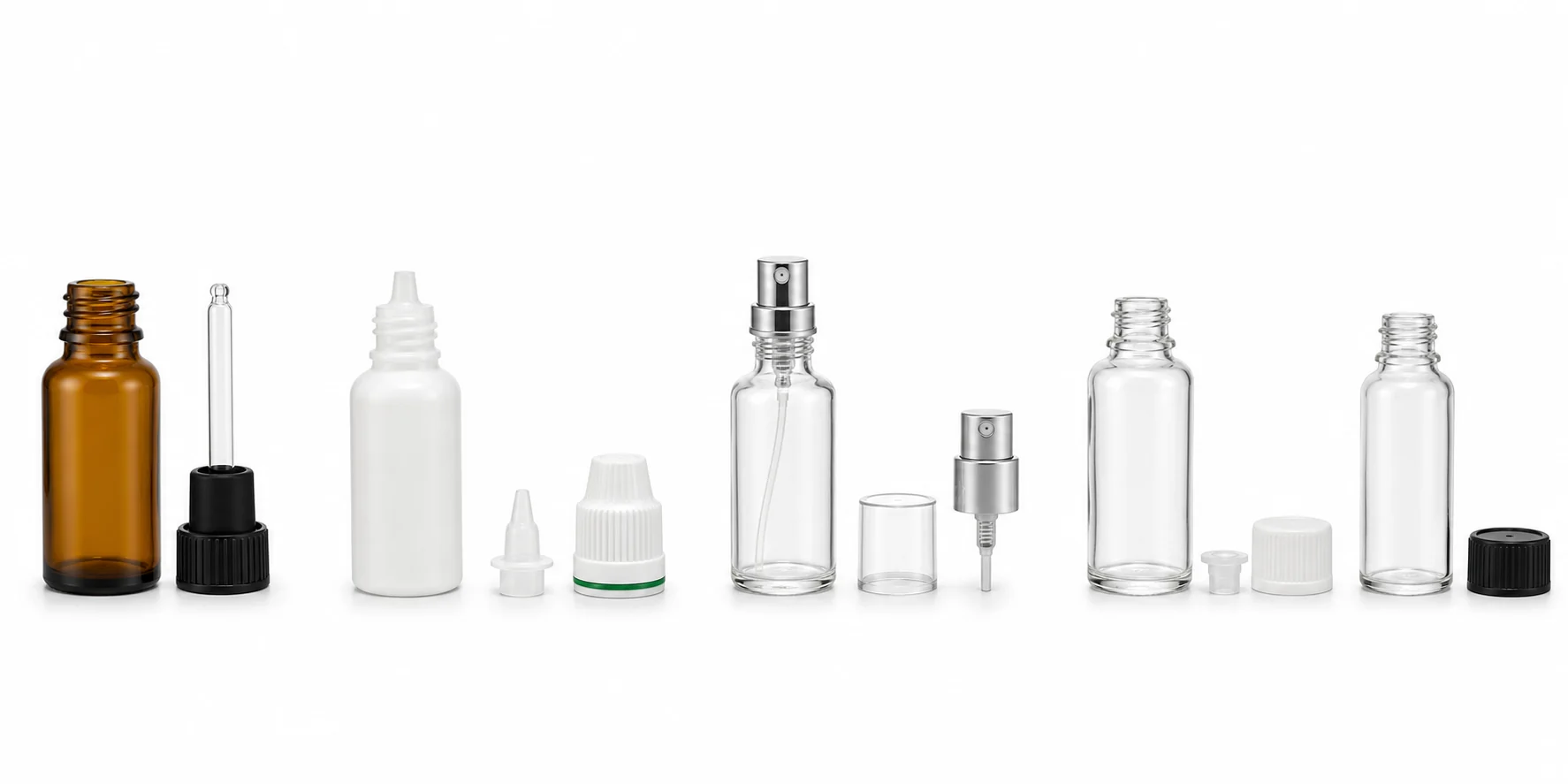
An oral liquid filling machine is not selected from bottle volume alone. A free-flowing oral solution, a sugar-based syrup and a suspension can require different product supply, metering, agitation, cutoff and cleaning arrangements. The closure sequence can also add more engineering work than filling: an inner plug, dropper, measuring closure or screw cap must be oriented, transferred, inserted and checked with the actual package.
1. Separate Oral Solution, Syrup and Suspension Requirements
“Oral liquid” describes the dosage form, not one repeatable flow condition. Equipment review starts with the product that will contact the tank, pump or dosing element, tubing, valves and nozzles.
| Product condition | Questions to confirm | Equipment consequence to review |
|---|---|---|
| Free-flowing oral solution or drops | Smallest dose, product compatibility, volatility, drip control and required measurement basis. | Small-volume metering direction, tubing or pump compatibility, nozzle cutoff and bottle positioning. |
| Sugar-based or viscous syrup | Viscosity at filling temperature, air entrapment, product supply pressure, strings and neck contamination. | Product feed, pump or piston direction, larger flow path, staged filling and positive cutoff. |
| Suspension | Particle size, settling behavior, allowable shear, hold time and batch uniformity requirements. | Tank agitation or recirculation, compatible flow path and representative sampling. Do not assume a standard liquid filler is suitable. |
| Multiple formulations on one line | Change frequency, allergen or active-product controls, retained product, cleaning endpoint and cross-contamination limits. | Drainability, dismantling, flushing or cleaning procedure, recipe control and documented line release. |
Published manufacturer information for pharmaceutical liquid equipment also distinguishes water-based, viscous, foamy and sugar-based products and multiple closure types. That supports the selection principle, but it does not establish the correct configuration for a ZXSMART project. The actual formulation and buyer requirements remain the basis for review.
2. Map Every Bottle and Closure Operation
Draw the sequence from empty bottle arrival to released finished bottle. An oral liquid package may require bottle feeding, cleaning or preparation outside the ZXSMART line scope, filling, inner-plug or dropper insertion, cap placement, tightening, labeling, coding and inspection. Do not hide a manual step between machines when comparing quotations.
A compact small-bottle filling and capping monoblock can be evaluated when filling, plug insertion and capping must be integrated. Standalone filling, capping and labeling machines may be more suitable when the package, output or buyer workflow requires separate stations. The decision follows the confirmed sequence, not a fixed industry template.
3. Choose a Filling Direction, Then Prove It With the Product
The first engineering shortlist should be based on product behavior, dose range and cleaning—not on the highest advertised bottles per minute. A small-volume free-flowing product may be evaluated with a peristaltic or other suitable metering direction. A viscous syrup may require a different pump, piston or product-feed arrangement. A suspension requires confirmation of mixing and product uniformity before dosing accuracy can be interpreted.
| Decision | What the supplier should state | What the factory test should record |
|---|---|---|
| Dose and accuracy basis | Minimum and maximum dose, control method and whether tolerance is based on set volume, target weight or another agreed basis. | Individual container results by filling head at agreed product condition and speed. |
| Product supply | Tank, level control, agitation or recirculation, piping and allowable hold condition. | Product uniformity, stable feed, startup loss and behavior after stop and restart. |
| Nozzle and cutoff | Nozzle count, diving or staged-fill motion, anti-drip or shutoff method and neck-clearance requirement. | Drips, strings, splash, foam, contaminated necks and acceptable first bottles after restart. |
| Changeover | Recipes, change parts, dismantling points, adjustment method and expected operator work. | A real change between representative bottles, doses or products and the controlled restart result. |
Use the filling accuracy and tolerance guide to define a comparable measurement basis. Published component or platform ranges are references only; the accepted result belongs in the project-specific factory acceptance record.
4. Define What the Packaging Line Includes—and What It Does Not
A professional quotation should separate included equipment, buyer-supplied systems and optional interfaces. This prevents a packaging-machine proposal from being mistaken for a complete pharmaceutical process or facility design.
- Upstream boundary: bulk product delivery, product preparation, filtration, bottle washing, sterilization or depyrogenation only when explicitly included and engineered.
- Packaging boundary: product buffer or supply, filling, plug or dropper handling, capping, conveying, labeling, coding, inspection and collection as stated in the approved scope.
- Production environment: room classification, environmental controls and clean utilities remain buyer-defined unless specifically contracted.
- Quality and validation: user requirement specification, risk assessment, qualification, sampling, analytical methods and regulatory responsibilities must be assigned in writing.
- Integration: signal interfaces, line stops, reject logic, data or recipe access and downstream capacity must be defined before release.
5. Set the Product-Contact and Cleaning Boundaries
Cleaning must follow the actual formulation and production policy. A frequently changed oral liquid line may prioritize accessible product-contact parts and controlled manual cleaning. Another project may specify a defined flush or CIP-related arrangement. The terms alone are not enough: map the wetted path and record how each section is drained, opened, cleaned, rinsed, inspected and released.
- Identify every tank, hose, pump or metering element, valve, manifold and nozzle that contacts product.
- Record materials, seals and tubing against the formulation, temperature and cleaning agent.
- Mark low points, retained-volume areas, dead legs and parts that require removal.
- Define the sequence from product recovery through cleaning, rinse, drying or preparation and line release.
- Agree how the buyer will verify the endpoint and prevent the next batch from starting before release.
The liquid filling machine cleaning and changeover guide provides a broader cleaning map. The oral-liquid project should convert that map into formulation-specific procedures and acceptance evidence.
6. Build a Factory Acceptance Test Around Accepted Bottles
Factory acceptance should test the complete configured sequence with production-representative product or an agreed substitute, all launch bottles and every closure component. A slow demonstration with water and one bottle type is not evidence for a syrup, suspension or multi-component closure project.
- Record the test material, temperature, batch condition and any differences from production product.
- Run every agreed fill volume and record individual results by nozzle or filling head.
- Check bottle infeed, positioning and transfer at the agreed sustained rate.
- Test plug or dropper feeding, insertion, missing-component detection and recovery from a misfeed.
- Check cap placement, thread start, tightening, visible defects and buyer-defined closure acceptance.
- Run startup, normal stop, restart, product or cap replenishment and controlled recovery.
- Complete one agreed changeover and document adjustments, change parts and first accepted bottles.
- Record deviations, corrections, retest results, recipes, videos and the final approved scope.
Use the factory acceptance process to define test conditions before production starts. Do not wait until the machine is complete to decide what “passes.”
7. Oral Liquid Filling Line Quotation Checklist
- Formulation type, viscosity or flow behavior, particles or settling, filling temperature and product-contact compatibility.
- Every dose, bottle drawing, neck finish, container material and stability condition.
- Inner plug, dropper, measuring component, cap and tamper-evident feature drawings and samples.
- Current and future sustained accepted-bottle output and shift pattern.
- Required bottle feeding, filling, closure, labeling, coding, inspection and reject stations.
- Production-room, cleaning, utility, documentation and buyer validation requirements.
- Changeover list, cleaning method, retained-product concerns and release criteria.
- Available footprint, line direction, upstream and downstream interfaces and operator access.
- Factory acceptance products, packages, measurement method, run duration and pass criteria.
- Installation, training, spare parts, service language and post-delivery responsibilities.
The bottle, closure, label and product checklist helps organize the first review. Drawings and digital details can start the discussion; physical product and components are requested later when tooling and factory testing require them.
Define the Oral Liquid Packaging Scope Before Quotation
Send the formulation behavior, dose range, bottle and closure drawings, process sequence, sustained output, cleaning requirements, utilities and buyer acceptance criteria. ZXSMART will review the packaging stations and state which physical samples are needed for the next engineering stage.
Send Oral Liquid Project Details8. Buyer FAQ
Which filling machine is suitable for oral liquid?
The selection depends on the actual product behavior, dose, accuracy basis, contact materials, bottle and cleaning scope. Free-flowing oral solutions and viscous sugar-based syrups should not be assumed to use the same dosing method without a representative product trial.
Can one machine handle solution, syrup and suspension?
A configurable platform may cover more than one product, but the supply, mixing requirement, metering method, nozzle, cleaning procedure and acceptance criteria must be reviewed for every formulation. Products with suspended solids require separate confirmation.
Can the line insert a plug or dropper and apply a screw cap?
Yes, if the configuration includes matched stations for plug or dropper feeding, insertion, cap placement and tightening. Actual bottles and closure components are needed to validate orientation, transfer, insertion force and final quality.
Does the machine automatically meet GMP or sterile requirements?
No. A machine name does not establish GMP compliance, aseptic suitability or a validated process. The buyer must define production environment, user requirements, product-contact design, cleaning, documentation and validation responsibilities.
What information is required before quotation?
Send formulation behavior, fill volumes, bottle and closure drawings, every closure component, sustained output, cleaning requirements, utilities, layout, inspections, documentation and factory acceptance criteria.
Research Notes
Public manufacturer material was used to confirm the range of pharmaceutical liquid behaviors and closure sequences that buyers may need to review. An Oklahoma State University extension guide was used only for general filler-selection principles such as product properties, material compatibility, temperature and cleanability. A public manufacturing discussion was used to identify buyer language around replacing separate manual filling, cap placement and tightening operations. These sources do not prove a ZXSMART configuration, performance result, customer case, certification or endorsement.