Cap Pickup, Placement And Tightening

Pick-and-Place Chuck Capping Machines

Select a single-head or four-head platform according to cap geometry, bottle stability, target output and the required tightening method.

Verified Configuration Comparison

One Machine Family, Two Head Arrangements

The single-head and four-head machines belong to the same pick-and-place chuck capping family. Compare the verified parameters and running videos here; final contact parts, bottle guides and cap feeder are matched to actual samples and target output.

Shared Process

Pick up, place and tighten each cap with the configuration matched to the project.

Head quantity changes the operating arrangement and target output. It does not create a separate machine family.

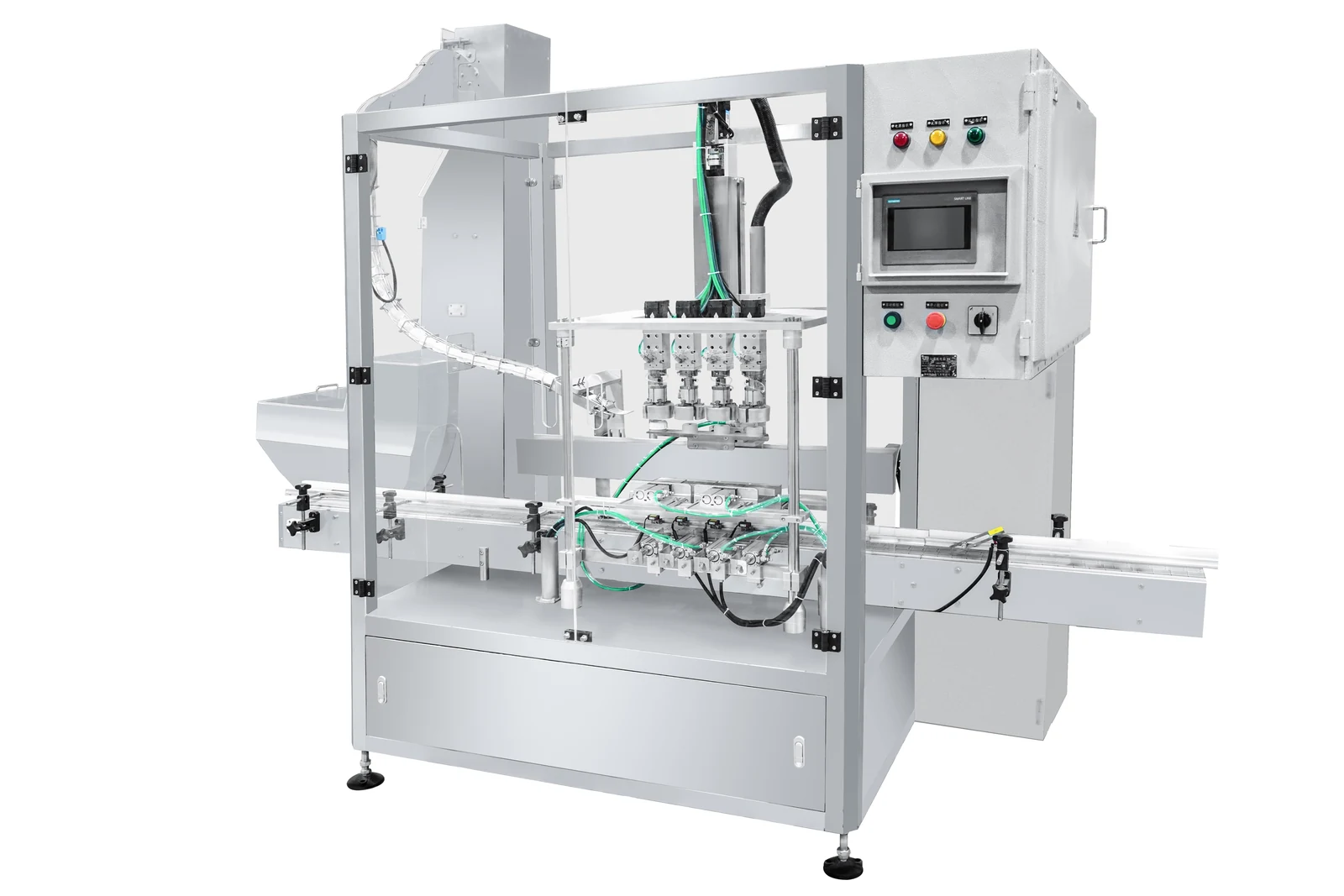
Single-head servo pick-and-place chuck capping machine
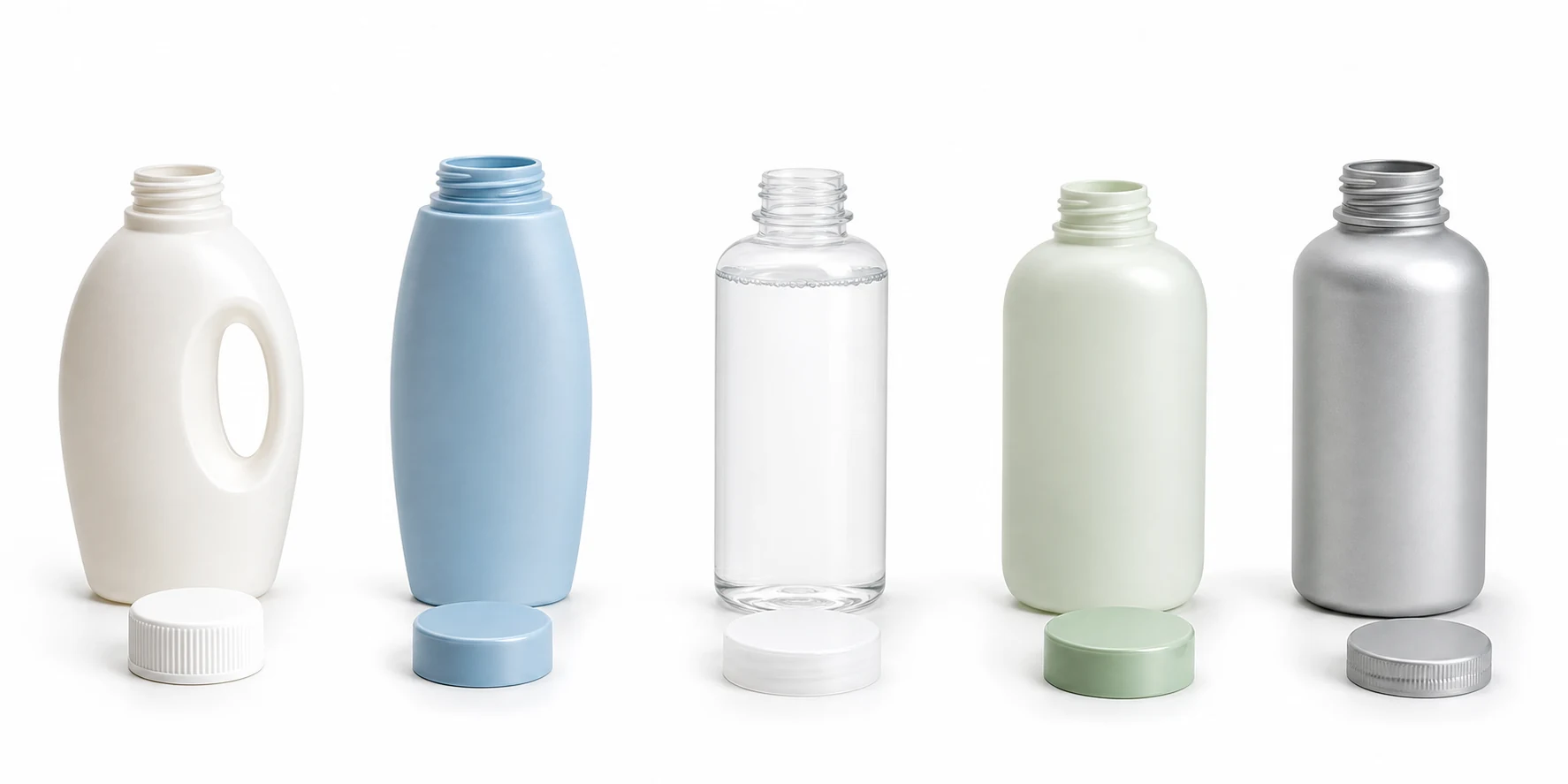
Typical threaded bottle and cap formatsThreaded plastic bottles and separate round caps for pick-and-place capping
Single-Head Configuration

Single-Head Servo Pick-and-Place Chuck Capping Machine

For threaded plastic and tamper-evident caps requiring controlled pickup, placement and servo tightening.

Capping Heads
1 servo tightening head
Typical Speed
20-25 bottles/min
Torque Range
0.5-8 N·m
Bottle Size
Φ25-200 mm / H50-250 mm
Cap Size
Φ20-100 mm / H8-35 mm
Cap Types
Threaded plastic and tamper-evident caps
Cap Feeding
Elevator sorter or vibratory bowl by sample
Utilities
220 V / 1.2 kW / 0.6-0.8 MPa
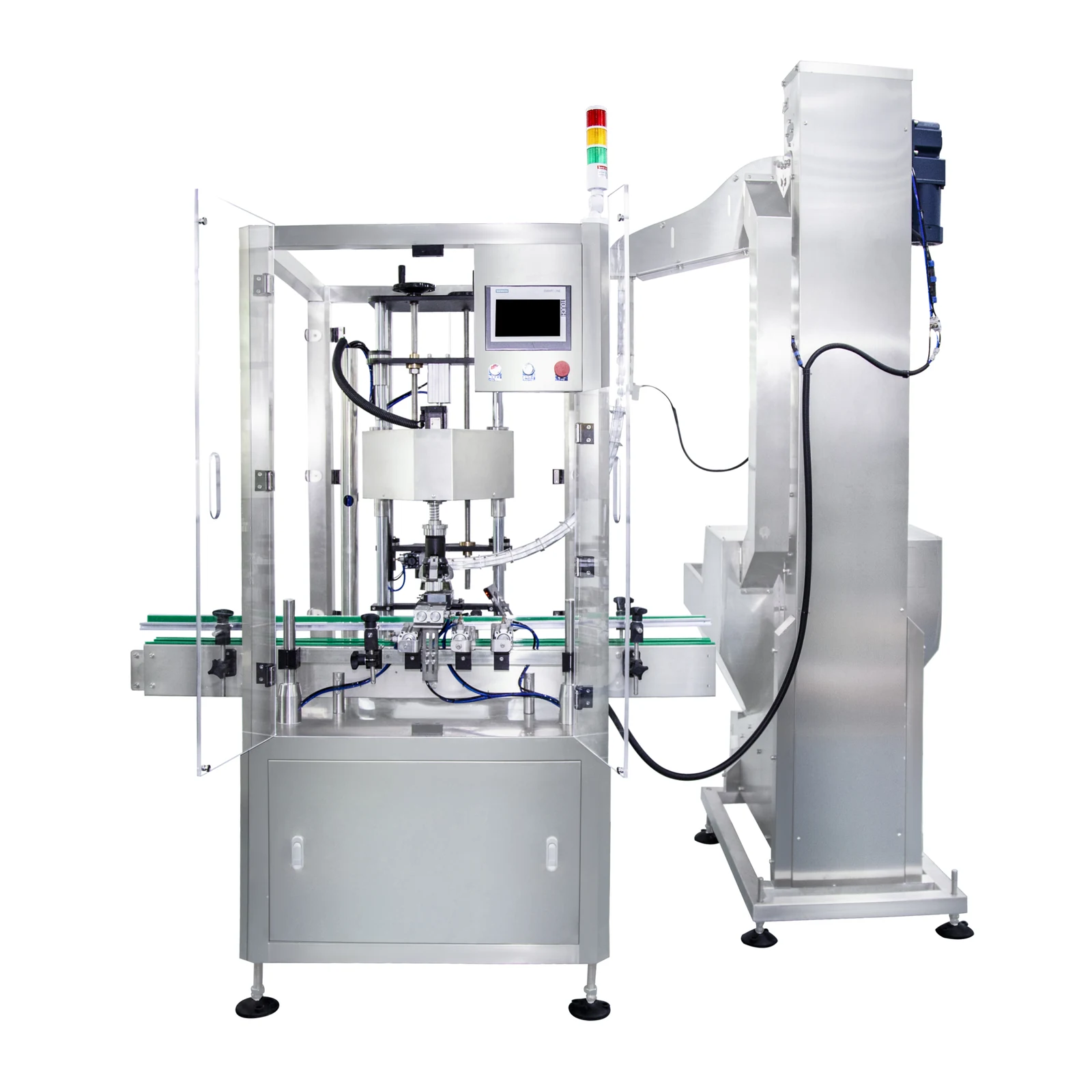
Four-head pick-and-place chuck capping machine
Typical flat round cap and bottle formatsBottles and jars with separate flat round caps for four-head pick-and-place capping
Four-Head Configuration

Four-Head Pick-and-Place Chuck Capping Machine

For suitable flat round caps on cream jars, daily toiletry bottles and beverage bottles at a higher target output.

Capping Heads
4 pneumatic heads
Typical Speed
50-60 bottles/min
Bottle Size
Φ30-200 mm / H100-300 mm
Cap Diameter
Φ22-110 mm
Cap Type
Suitable flat round caps
Cap Separation
Servo-driven cap hooking and separation
Cap Feeding
Elevator sorter; cap loader optional
Utilities
380 V / 3.5 kW / 0.6-0.8 MPa
Application Boundary

Suitable Applications And Important Limits

The two configurations share a pick-and-place process, but cap shape, bottle support and tightening method still determine the correct arrangement.

Suitable For

  • Threaded plastic and tamper-evident caps with the single-head servo configuration
  • Suitable flat round caps with the four-head configuration
  • PET, PE and glass containers with stable bottle handling
  • Projects that require automatic cap feeding, pickup and placement

Confirm Another Configuration For

  • Press-on or snap caps that require a press capper
  • Closures that cannot be reliably oriented
  • Irregular caps without sample testing
  • Soft or unstable containers without dedicated support
Working Process

How The Two Head Arrangements Work

Both machines sort, pick and place caps automatically. The head arrangement and final capping action are selected from the cap sample and target output.

Single-Head Servo Process

  1. Bottle infeed and positioning
  2. Cap sorting and pickup
  3. Cap placement on the bottle
  4. Servo tightening and discharge

Four-Head Parallel Process

  1. Bottle infeed and clamping
  2. Cap elevator and separation
  3. Four-head pickup and placement
  4. Inline capping and discharge
Real Machine Videos

See Both Configurations Running

These videos show the supplied single-head and four-head machines. Final cap feeding, gripping parts and line timing are confirmed with project samples.

Engineering Inputs

What We Confirm Before Configuration

01

Bottle

Diameter, height, neck strength and stability.

02

Closure

Cap dimensions, geometry, stiffness and liner.

03

Output

Sustained qualified bottles per minute.

04

Line Interface

Conveyor height, direction, spacing and downstream equipment.

Buyer Questions

Frequently Asked Questions

Do you need cap and bottle samples?

Yes. Actual bottle, cap and liner samples are required to confirm orientation, gripping, placement, torque and changeover parts.

How do I choose between the single-head and four-head configurations?

The correct arrangement depends on cap geometry, tightening method, bottle stability and the required sustained output. The four-head option is not automatically suitable for every cap.

Can the machine connect to an existing line?

Yes. Conveyor height, line direction, upstream spacing and downstream equipment must be confirmed before engineering approval.

Can these machines handle every cap shape?

No. Cap geometry, stiffness, center of gravity and orientation behavior determine whether pick-and-place handling is suitable.

Project Review

Send Samples And Target Output

Our engineers review the product, bottle, closure, required speed, utilities and line interface before confirming a machine configuration.

Request A Proposal